

Centered on “Slide / Hold / Seal,” STARLITE delivers one-stop proposals by combining material design × molding and processing × evaluation and analysis—to realise the optimum “motion” for each application.
On this page, we introduce three representative STARLITE tribology sub-brands: BAKES / ALP / S-BEAR.

Before we introduce our sub-brands…
What is tribology?
It directly influences energy loss, service life, reliability, safety, and maintenance workload in machines and equipment.
In practice, tribology focuses on how to control and optimise:

FRICTION

WEAR
LUBRICATION
Increased friction leads to energy loss and heat generation, while progressing wear reduces service life and reliability through changes in clearance and loss of dimensional accuracy.
By optimising lubrication conditions and, in an integrated manner, the material selection, surface specification, and component geometry, tribology contributes to extended equipment life, stable operation, and reduced maintenance workload.
BAKES
Material technology for demanding conditions—
supporting sliding performance and durability in high-temperature, high-load, harsh environments.
#LowerMaintenance #SteelIndustry #PulpAndPaper #HeavyDutyEquipment #FrictionMaterials #WearLiners
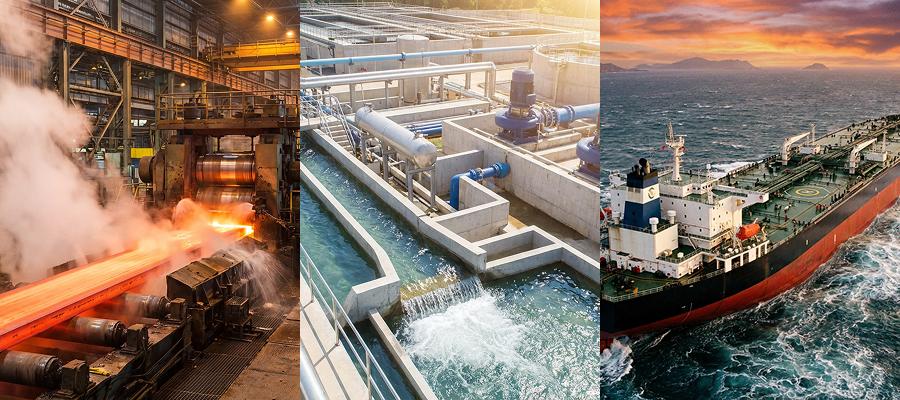
With extensive field experience in harsh continuous-process lines—including the steel and pulp and paper industries—BAKES supports application-specific material design and offers high design flexibility, including capability for long-length components.
- High-temperature capable: Proven in sliding applications under severe temperature conditions.
- High-load / long service life: Proven in durability-critical applications for heavy-duty equipment.
- Application-specific optimisation: Material design tailored to application, counterface material, and sliding conditions.
- Steel rolling line components: wipers / apron liners / metal sleeves, etc.
- Rudder shaft bearings for large vessels
- Wear rings for hydraulic cylinders, vanes for vacuum pumps, guide rails for food conveyors, etc.
- “Lubrication does not survive at high temperature / seizure occurs.”
- “Metal causes galvanic corrosion, galling, and is heavy to handle during maintenance. We want to switch to polymer, but general-purpose resins lack strength.”
- “We want to extend wear life without damaging the counterface material.”
ALP
PTFE-based materials engineered for harsh gas environments.
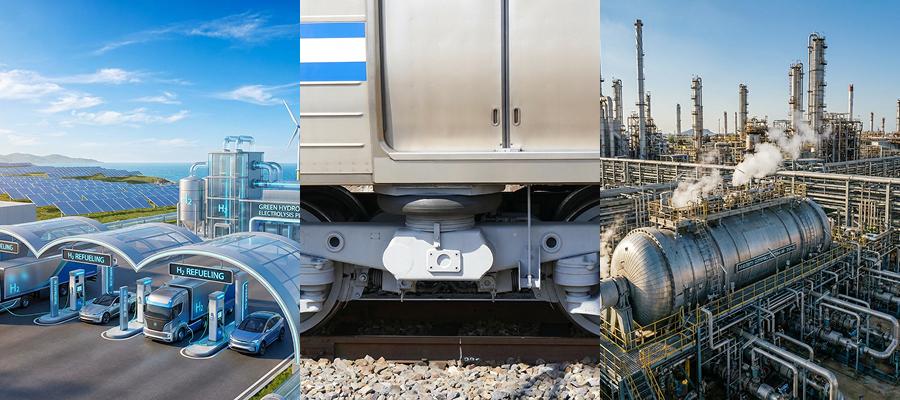
From high-pressure hydrogen to cryogenic temperatures—optimised proposals tailored to your operating conditions.
A range of grades is available to match the operating environment—oil, water, and various gas atmospheres. In addition to grade selection for each application, we also support custom design to meet specific requirements.
ALP provides stable sliding performance even in gas environments such as high-pressure hydrogen, contributing to higher durability and longer service life of components. For cryogenic conditions such as liquid hydrogen, we can also propose material and structural solutions aimed at stabilising sealing performance.
- Stable gas sealing: Designed to stabilise leakage performance even under high-pressure gas environments.
- Cryogenic capability: Designed with a constant-clearance concept to reduce design burden and stabilise sealing at very low temperatures.
- Non-standard geometries supported: Large-diameter rings (up to Ø1400) and long-length extruded profiles.
- Long-length rollers for bakery equipment
- Reciprocating compressor components: piston rings, rider rings, rod packing, etc.
- Polymer seals for cryogenic environments
- “We want to extend seal life and reduce downtime and replacement workload.”
- “Clearance design is difficult at cryogenic temperatures, and leakage is hard to predict.”
- “We need stable performance under high pressure and large temperature fluctuations.”
S-BEAR
Redefine the standard in series-produced sliding components through material design.
Optimised to your conditions for low torque, noise reduction, and grease-free operation.
#WearResistance #LongServiceLife #PrecisionSliding #Gears #Bearings #Slides #AddedFunctionality #HeatResistance #Conductive #FlameRetardant #CAE
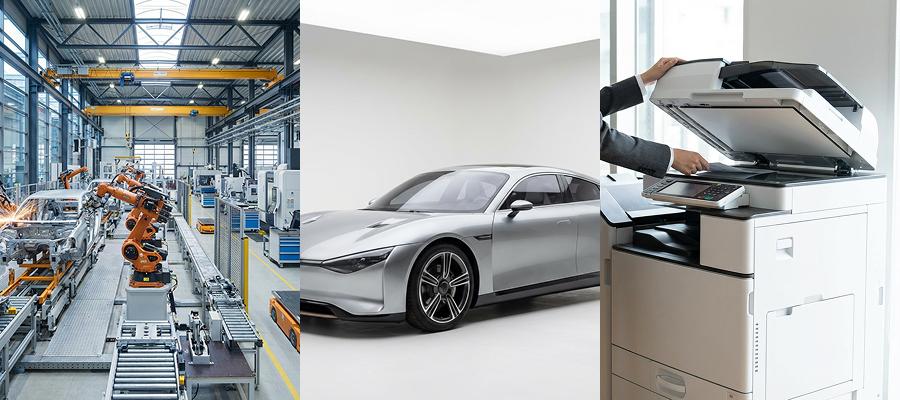
It is used in sliding and drive-train components for office equipment and automotive applications.
By combining material design with precision injection molding technology, we support series-production implementation of high-function components tailored to required specifications.
In addition, we provide accelerated, high-accuracy development support using CAE, along with material selection and grade design (customisation). Through motion analysis that accounts for torque variation, we help stabilise mechanism operation and improve repeatability of performance.
- Wear-resistant / high durability: Extends service life of sliding and drive components.
- CAE × material × design: Selection and design proposals aligned with target performance requirements.
- Compact, grease-free, low-noise: Supports overall mechanism optimisation.
- Functional components for automotive applications
- Gears and bearings for office equipment (OA)
- Gears and reducers for robots and actuators
- “We want lower torque without grease / reduce heat generation.”
- “We need to eliminate squeal (stick-slip).”
- “We want to replace metal with polymer to reduce weight and assembly workload.”
Please feel free to contact us for an initial discussion
Even if none appears to be an exact match, STARLITE will work with you—through the lens of “Slide / Hold / Seal”—to clarify operating conditions and identify feasible options.
Start with a quick feasibility check—“Can it work under these conditions?”—and we will take it from there.