



- cryogenic
- liquid hydrogen
- material-development
- proposals
Design and Evaluation of Polymer Components for Cryogenic Applications
Supporting Material Selection, Seal Design, and Tribological Evaluation
In cryogenic environments involving liquid hydrogen, liquefied natural gas (LNG), and other cryogenic fluids, components are simultaneously affected by thermal contraction, material stiffening, changes in clearance, and lubrication constraints.
Differences that are barely noticeable at room temperature can lead to significant performance changes under cryogenic conditions.
STARLITE combines material selection, component geometry design, and in-house evaluation to support the development of polymer components for these demanding environments. For seals and sliding components in particular, design decisions should be based on a clear understanding of how both materials and component geometries behave at cryogenic temperatures.
Please note: This article presents a conceptual proposal exploring future possibilities based on our current technical knowledge and the direction of our evaluation and development activities. Actual application requires individual assessment based on the specific operating conditions.
Cryogenic Performance Cannot Be Judged by Room-Temperature Data Alone
Under cryogenic conditions, differences in thermal contraction between metals and polymers become more pronounced, making seal-clearance design particularly demanding.
A design optimized for room-temperature performance may lead to excessive leakage at cryogenic temperatures. Conversely, a design optimized too heavily for cryogenic performance may make room-temperature assembly difficult or create excessive interference.
Material stiffening and changes in tribological conditions must also be considered. For this reason, cryogenic components should be evaluated not only in terms of material properties, but also in terms of component geometry and overall structure.
STARLITE’s Technical Approach
1. Material Selection and Geometry Design for Cryogenic Service
We review operating conditions such as temperature, load, mating material, pressure, and gas atmosphere.
Based on these conditions, we support not only material selection, but also geometry proposals that take thermal contraction, sealing performance, and sliding behavior into account.
For seals and sliding components used in cryogenic environments, reviewing the overall component structure is often just as important as selecting the material itself.
2. In-House Evaluation from Basic Properties to Sealing Performance
One of STARLITE’s strengths is its ability to evaluate the performance required under cryogenic conditions in-house, in addition to proposing materials and component geometries.
The compression and flexural properties of polymer materials can be evaluated over a temperature range from −196°C to 200°C. We can also evaluate friction and wear characteristics under cryogenic and special-gas environments, as well as gas leakage at −196°C.
By evaluating basic material properties, tribological performance, and sealing performance in stages, we obtain data that can be used for material selection and component geometry design.
3. Evaluation Data That Guides Design Decisions
The suitability of seals and sliding components for cryogenic service cannot be determined from material strength alone.
Thermal contraction, material stiffening, mating materials, temperature, pressure, gas atmosphere, contact pressure, and sliding speed can all affect friction, wear, and gas leakage.
STARLITE combines mechanical-property data, tribological evaluation, and sealing-performance data to support decisions concerning:
- Material selection for the intended operating temperature
- Dimensional design considering differences in thermal contraction between metals and polymers
- Seal clearance and interference
- Contact pressure and potential effects on the mating material
- Component geometry considering friction and wear
Evaluation results are fed back into material and geometry reviews, helping to identify the technical issues that must be addressed under cryogenic conditions.
In-House Evaluation Capabilities for Cryogenic Development
STARLITE evaluates the compression and flexural properties of polymer materials over a temperature range from −196°C to 200°C.
At cryogenic temperatures, polymer materials may become stiffer and exhibit strength and modulus values that differ significantly from those measured at room temperature.
Understanding these temperature-dependent properties provides a basis for evaluating seal deformation, contact pressure, and the deformation of sliding components under load.
Main Mechanical Properties Evaluated
- Compressive strength and compressive modulus
- Flexural strength and flexural modulus
- Comparison between room-temperature and cryogenic properties
- Comparison of temperature dependence among candidate materials
Cryogenic Friction and Wear Testing
Our cryogenic friction and wear tester is used to evaluate the tribological characteristics of polymer materials under cryogenic temperatures and special-gas atmospheres.
| Test parameter | Available conditions |
|---|---|
| Gas atmosphere | Helium (He) or hydrogen (H₂) |
| Test temperature | Room temperature or −196°C |
| Contact pressure | Up to 25 MPa* |
| Sliding speed | Up to 3 m/s* |
| Additional capability | Sliding tests with the test section immersed in liquid nitrogen |
※The achievable contact pressure and sliding speed depend on specimen geometry and other test conditions.

Cryogenic Friction and Wear Tester
Supports tribological evaluation in helium and hydrogen atmospheres at −196°C.
Cryogenic Seal Testing
Our cryogenic seal tester is used to evaluate helium leakage at room temperature and −196°C.
| Test parameter | Available conditions |
|---|---|
| Seal gas | Helium (He) |
| Gas pressure | Up to 5 MPa |
| Test temperature | Room temperature or −196°C |
| Main evaluations | Gas leakage rate and comparative performance of different materials and seal geometries |
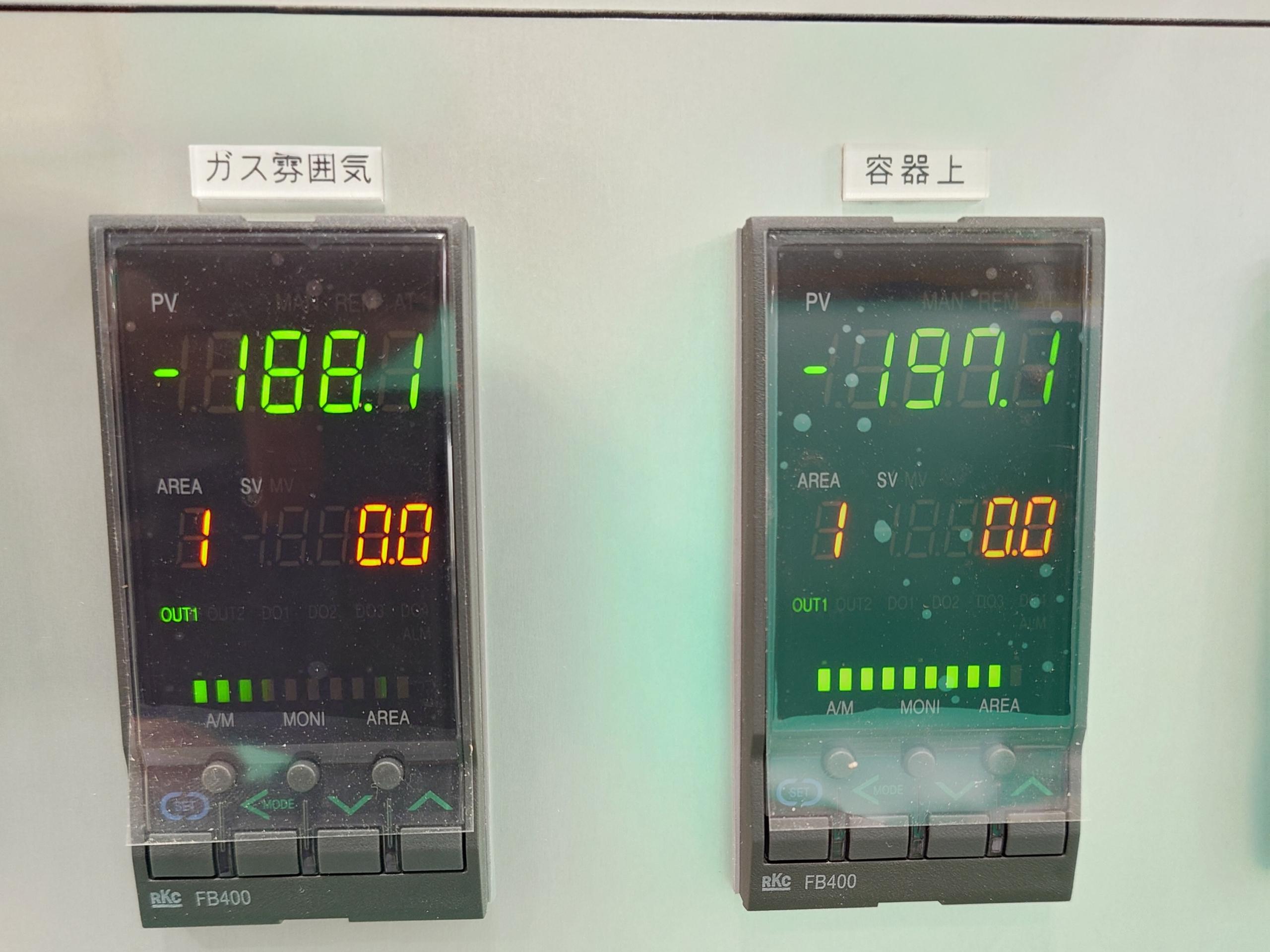
At Starlite, cryogenic testing is not limited to performance verification. We use the results to inform material selection and component geometry.
By evaluating basic properties, friction and wear, and sealing performance in-house, we can refine test conditions and repeatedly compare candidate materials and design options as development progresses.
Relevant Challenges and Evaluation Needs
In cryogenic environments, thermal contraction and material stiffening can cause leakage, contact, or unstable sliding behavior that may not occur at room temperature.
Lubrication is also often restricted, making it necessary to consider the material, mating material, and component geometry together.
- Sealing performance is unstable under cryogenic conditions, or clearance changes may cause leakage, contact, or impaired rotation.
- Lubrication constraints require the material and component geometry to be reviewed together.
- In-house evaluation equipment is unavailable, or external testing alone does not provide sufficient data for design decisions.
STARLITE can evaluate compression and flexural properties under cryogenic conditions, friction and wear in helium and hydrogen atmospheres or liquid nitrogen, and gas leakage at −196°C.
Even when specifications or candidate materials have not yet been finalized, we review the operating temperature, pressure, gas, mating material, and sliding conditions to identify what should be evaluated and where the development process should begin.
STARLITE works with customers to determine which characteristics must be verified under cryogenic conditions and how the evaluation should be approached from the perspectives of materials, geometry, and testing.
Our approach to cryogenic development begins not with abstract discussions of future applications, but with using existing evaluation capabilities and design expertise to generate data that supports engineering decisions.
STARLITE supports the evaluation of cryogenic applications from the combined perspectives of materials, component geometry, and performance validation.
Contact us to discuss material selection, seal design, sliding components, or evaluation methods for cryogenic service.