



The Three Core Technologies Behind STARLITE’s Tribology
The ability to engineer polymer materials from the ground up.
The ability to mold them into the shapes you need and manufacture them consistently at scale.
And the ability to validate performance under conditions close to real-world operation, so you can be confident they truly work.
Designed through engineering. Realized through manufacturing. Proven by testing.
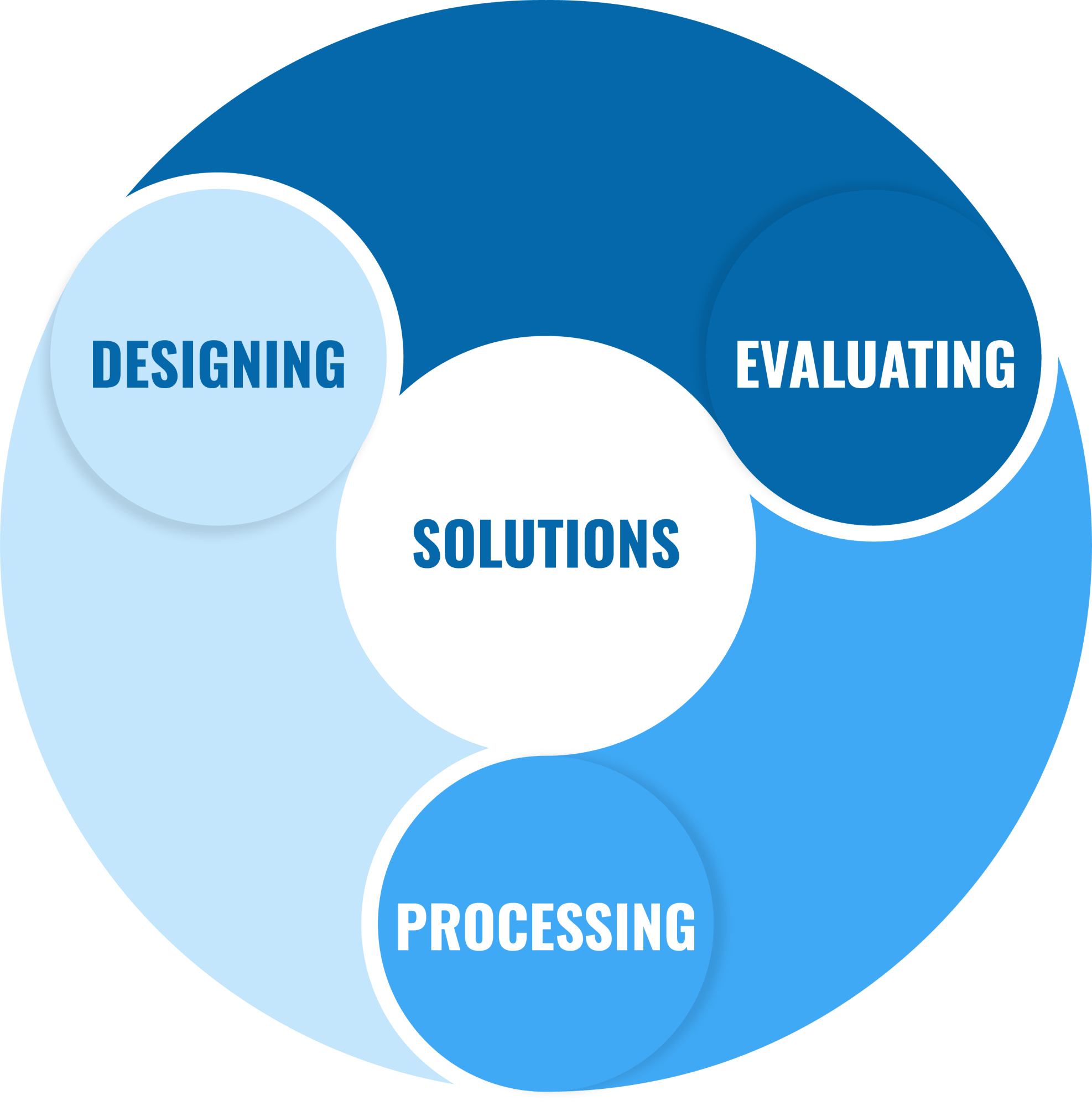
To support reliable motion behind the scenes, STARLITE has refined three core capabilities:
Development & Design / Manufacturing & Production / Validation & Testing
A core capability that turns challenges into clear requirements —and moves proposals forward
01
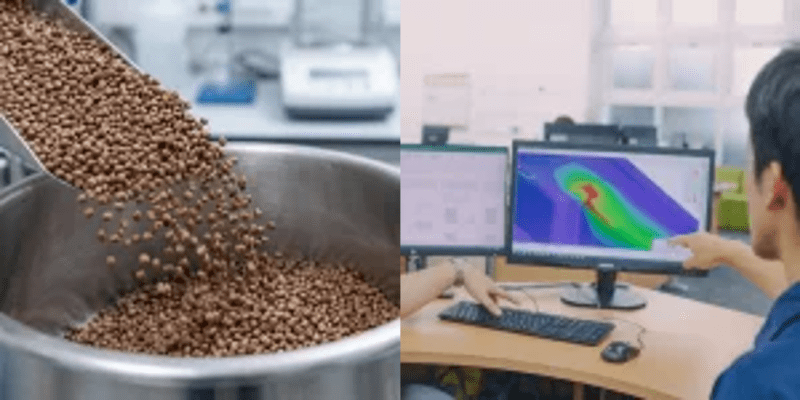
Designing
Engineer target performance through materials and structural design
- Materials Design (Formulation)
- Geometry Design
- Function-Driven Design
02
Processing
Consistently reproduce designed performance in mass production
- Injection / Compression / Lamination / Metal-Polymer Hybrid Molding
- Precision Machining
- Prototype to Mass Production

03
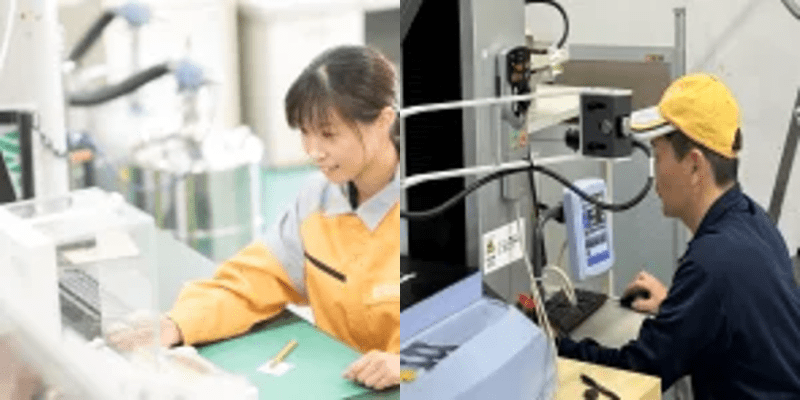
Evaluating
Validate performance with data—and optimize with confidence
- CAE Simulation & Validation
- Performance Testing (Tribology)
01
Designing
Engineer target performance through materials and structure.
Polymer components cannot be defined by material or geometry alone.
At STARLITE, we develop material design, geometry design, and function-driven design in parallel to achieve both target performance and manufacturability at scale.
Technical Highlights
1) Materials Design
Using thermoset resins (including FRP composites), fluoropolymers, and engineering plastics as base materials, we combine organic and inorganic fillers with fiber reinforcements to tailor performance to each application—optimizing coefficient of friction (CoF), wear resistance, heat deflection resistance, and electrical properties.
We also support environmentally conscious material development using biomass-derived feedstocks and recycled content.
2) Geometry & Structure Design
For thin-wall designs, complex geometries, and part integration, we translate requirements into manufacturable structures—supporting metal insert molding, polymer-to-polymer hybrid molding, as well as machining and assembly for large components.
3) Function-Driven Design
For functional requirements such as sliding, braking, and sealing, we design materials, geometry, and validation plans as one integrated package and propose clear specifications that meet target performance.
What It Solves
- Replace metal parts to reduce weight and improve energy efficiency
- Prevent wear and seizure under harsh operating conditions, including high temperatures, high loads, and chemical exposure
- Reduce dimensional variation and defects in mass production
STARLITE Sub-brands
BAKES | Phenolic-based Laminates & Friction Materials
ALP | High-Performance PTFE-Based Materials
S-BEAR | Injection-Moldable High-Performance Engineering Plastics
02
Processing
Deliver the performance you designed—consistently and at scale.
To reproduce designed performance in mass production, process design—especially molding and machining—is critical.
We account for polymer behavior such as warpage and shrinkage, and design and manage tooling, molding conditions, and machining and finishing parameters to translate requirements into production-ready specifications and process windows.
Technical Highlights
1) Molding & Tooling Engineering
To shape difficult-to-process materials such as PEEK as intended, we translate flow simulation results into tooling design and select the best method—compression, injection, or lamination—to stabilize accuracy, appearance, and durability.
2) Process Window Design & Control (Molding × Machining)
Taking warpage and shrinkage into account, we define what should be controlled in molding versus finishing and specify tolerances, finishing requirements, and inspection criteria so performance can be reproduced reliably.
3) Production System & Supply Design
From one-off prototypes to mass production, we coordinate global manufacturing sites to deliver stable supply while meeting required quality and lead-time targets.
What It Solves
- Reduce dimensional variation and defects in mass production
- Achieve target shapes and precision with difficult materials/complex geometries
- Maintain quality when scaling from prototype to mass production
03
Evaluating
Validate performance with data—and optimize with confidence
In tribological systems involving sliding contact, friction and wear performance can vary significantly due to the interaction of material pairings (including the counterface), geometry, and operating environment.
We predict behavior through CAE, then verify performance under application-relevant conditions at our in-house evaluation center. By integrating prediction and proof, we provide recommendations backed by both engineering logic and measured data.
Technical Highlights
1) Analysis & Validation (CAE)
• Flow simulation: Visualize molding risks such as warpage and shrinkage
• Operating-condition simulation: Predict stress, deformation, contact pressure, and thermal behavior
• Parallel concept comparison: Compare material and geometry concepts to identify the best solution early
2) Performance Testing
• Testing under real operating conditions, including load, speed, temperature, media/fluids, and counterface materials
• Quantitative measurement of wear and CoF
• Identification of wear modes and root causes of noise and vibration
3) Correlation (Linking Prediction and Proof)
• Correlate simulation outputs with measured data to improve model accuracy
• Feed the results back into design to improve specification confidence and repeatability
What It Solves
- Reduce “we won’t know until we build it” uncertainty
- Explain design feasibility with data-backed evidence
- Eliminate rework and development risks early
Design & Validation Process
1. Define operating conditions (load / speed / temperature / media / counterface material, etc.)
2. Pre-validate with CAE (hypothesis → multiple concepts → early identification of the best solution)
3. Prove with in-house testing (measure wear and CoF under real-use conditions)
4. Translate the results into production specifications (geometry / tolerances / process / inspection)
Note: We conduct CAE simulations as part of our product development and design support activities. We do not offer standalone CAE analysis services (analysis-only requests), nor do we perform simulations solely for third-party products. Thank you for your understanding.